Private Mortgage Insurance: What It Is and How Home Equity Can Affect ItIf you bought your home with a conventional mortgage and put less than 20% down, you may still be paying private mortgage

Dated: August 19 2026
Views: 49
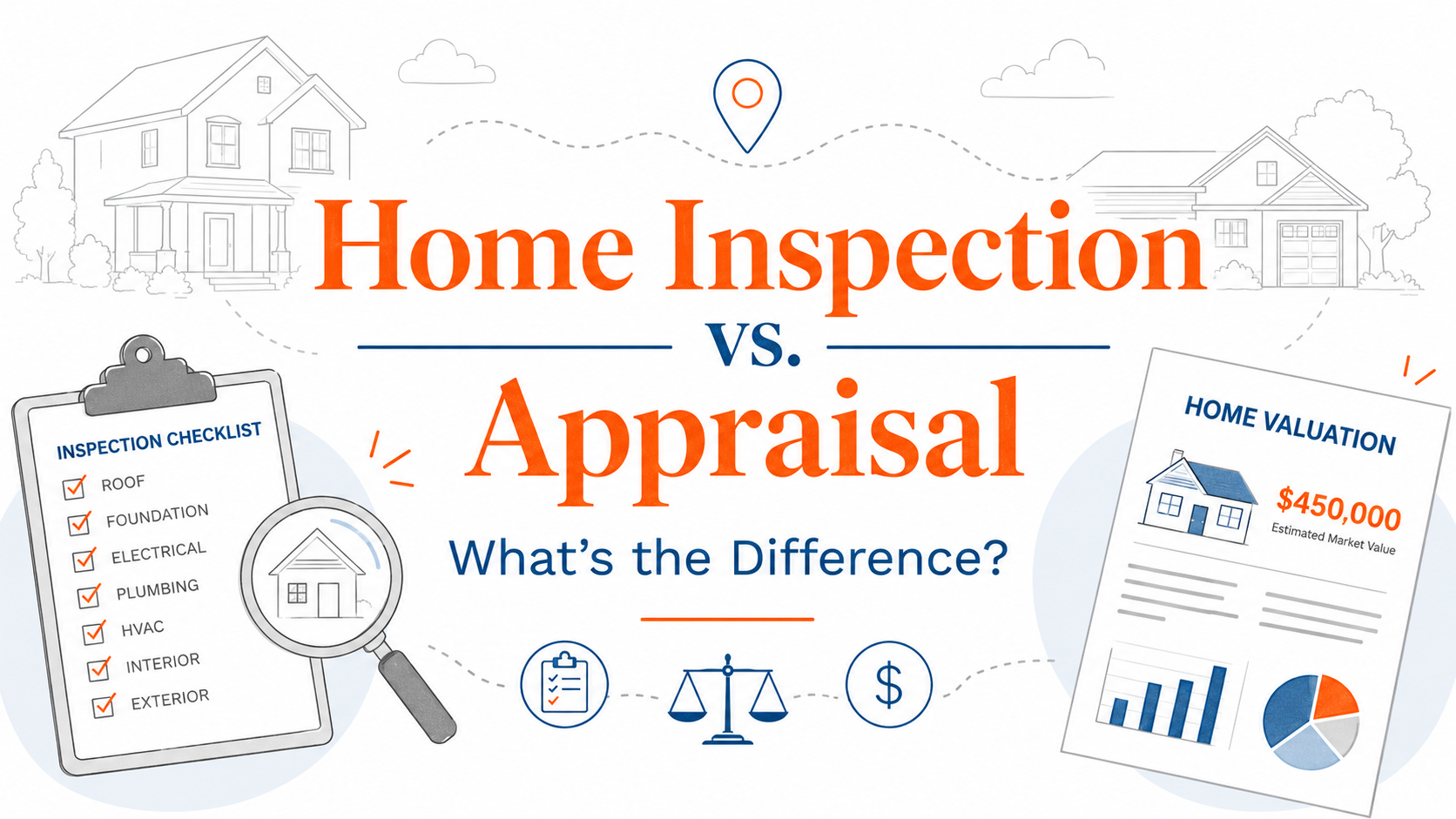
Buying a home comes with a lot of new terminology, and two steps that buyers often confuse are the home inspection and the appraisal.
Both typically happen after a home goes under contract. Both involve someone evaluating the property. And both can uncover information that affects the transaction. But they serve very different purposes.
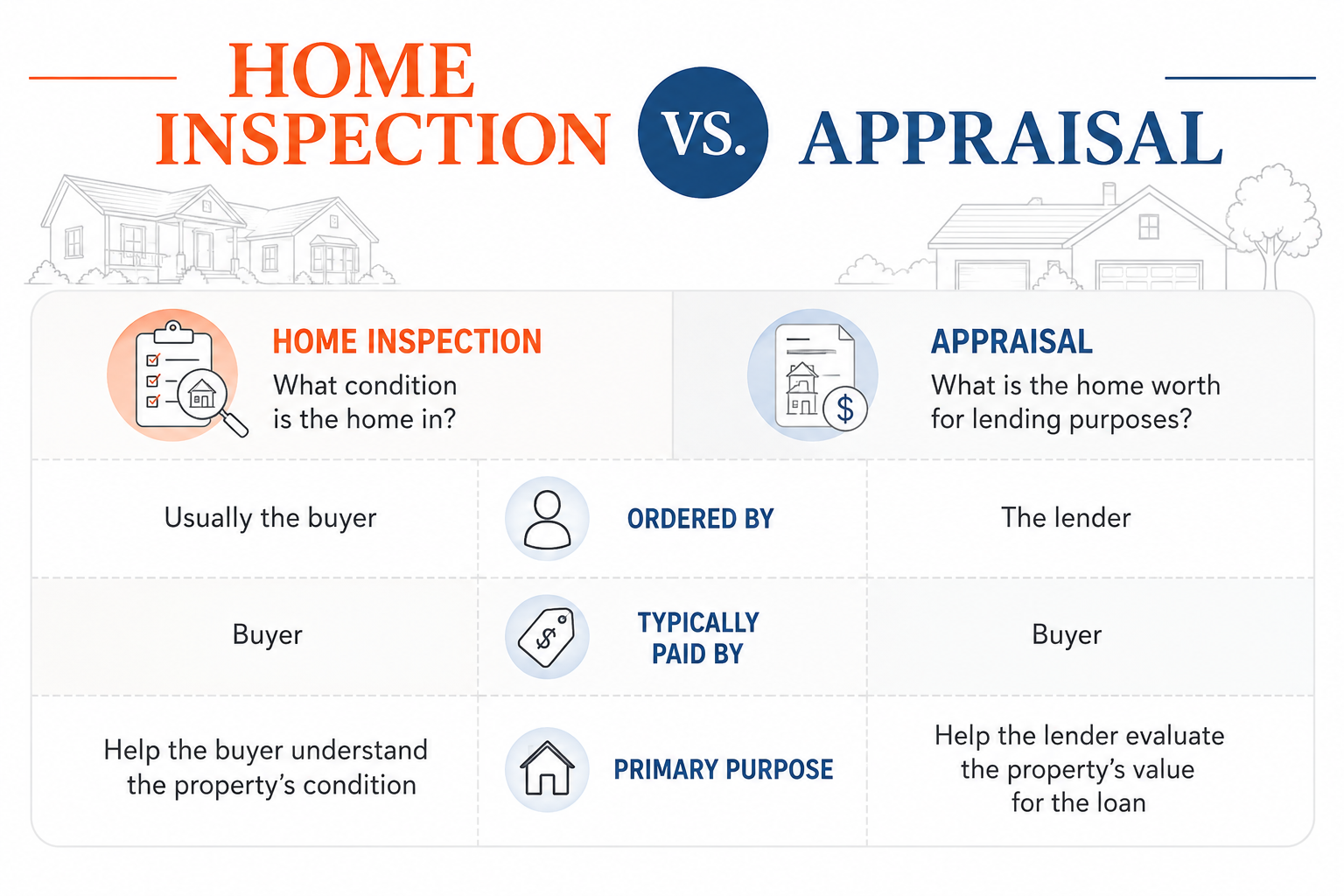
The simplest way to remember it is this: an inspection helps you understand the condition of the home. An appraisal helps the lender understand its value.
A home inspection is primarily for the buyer’s benefit. The inspector evaluates the home’s visible and accessible components and reports on their condition.
Depending on the property and the inspection services ordered, this can include the roof, foundation, electrical system, plumbing, HVAC, appliances, windows, doors and other components of the home.
The goal isn’t to decide what the house is worth. It’s to help you better understand what you’re buying and what issues may exist.
In Texas, the inspection often takes place during the option period if the contract includes one. That timing matters because the option period may give the buyer an unrestricted right to terminate the contract within the agreed-upon timeframe.
The buyer typically selects the inspector, orders the inspection and pays the inspection fee directly. Depending on the property, a buyer may also choose additional inspections or evaluations for things such as a septic system, pool, well, sewer line, foundation or other specialized components.
An appraisal has a different purpose. When you’re financing a home, the appraisal is generally required by the lender to help determine the property’s market value for the loan.
The appraiser considers the property itself along with relevant market data and comparable sales. The resulting appraisal gives the lender an independent opinion of value to help determine whether the property provides adequate collateral for the amount being financed.
Unlike the home inspection, the lender generally orders the appraisal through its appraisal process. The buyer typically pays the appraisal fee as part of the costs associated with obtaining the loan.
That distinction is important. Your REALTOR® may provide a comparative market analysis when helping you decide what to offer, but that is not the same thing as the lender’s appraisal.
One does not replace the other.
A home could appraise at or above the contract price and still have inspection issues. Likewise, a home could be in great physical condition, but appraise below the agreed purchase price.
Finding something during an inspection doesn’t automatically mean the deal is over.
Depending on the contract and where you are in the transaction, the buyer may decide to accept the property as-is, request repairs, negotiate another solution or exercise a contractual right to terminate.
This is where understanding your contract and its deadlines becomes especially important. An inspection report provides information, but what you can do with that information depends on the terms of your contract. Your REALTOR® can help you understand your options, keep track of important deadlines, and navigate the next steps based on what the inspection uncovered.
A low appraisal creates a different conversation.
If the appraised value is below the contract price, the lender may calculate the loan based on the lower appraised value rather than the higher purchase price. From there, the buyer and seller may need to evaluate their options.
What happens next depends heavily on the financing and appraisal provisions in the contract. It could involve additional negotiations, the buyer bringing additional funds to closing, or other contractual options. Your REALTOR® can help you understand how the appraisal provisions in your contract apply, communicate with the lender and other agent, and navigate any negotiations that may follow.
A low appraisal does not automatically mean the contract price changes.
The inspection and appraisal are two separate pieces of due diligence, and they answer two very different questions.
The inspection helps you evaluate the home itself.
The appraisal helps support the financing and value side of the transaction.
For buyers in Bryan-College Station and throughout the Brazos Valley, we spend a lot of time explaining these steps before they happen. At NextHome Realty Solutions BCS, our goal is to make sure buyers understand not only what needs to happen next, but why it matters.
When you know what each step is designed to accomplish, the time between going under contract and closing feels a lot less mysterious.
If you’re thinking about buying your first home, moving to Bryan-College Station, or simply trying to understand the process before you start, reach out to Amber. I'll be happy to walk through the process and help you know what to expect before you’re under contract.
🏠 Here to help you find your happy place! 🧡
Amber Romitelli | REALTOR®
NextHome Realty Solutions BCS
Texas Real Estate Commission: What Consumers Should Know About Texas Property Inspections
Consumer Financial Protection Bureau: What Are Appraisals and Why Do I Need to Look at Them?
Fannie Mae: Understanding Home Appraisals

Amber Romitelli is a REALTOR® with NextHome Realty Solutions BCS, serving buyers and sellers across Bryan-College Station, TX. She is part of the #1 NextHome office in Texas and the #9 NextHome offic....
Private Mortgage Insurance: What It Is and How Home Equity Can Affect ItIf you bought your home with a conventional mortgage and put less than 20% down, you may still be paying private mortgage
Planning for Fall 2027 Aggie Housing? It’s Earlier Than You ThinkIf your student is planning to attend Texas A&M in Fall 2027, housing may feel like something you can deal with next spring
The Rooms Buyers Fall in Love With FirstYou can walk through ten houses in one afternoon and remember each one for a completely different reason.One might have the kitchen. Another has a primary
Seller Concessions Explained: Why a Price Reduction Isn’t Always the Best DealWhen buyers and sellers negotiate a home purchase, price tends to get most of the attention. But sometimes the
 © 2026 Bryan College Station Regional Association of Realtors. All rights reserved. Information deemed to be reliable but not guaranteed. The data relating to real estate for sale on this website comes in part from the Broker Reciprocitysm Program. Real estate listings held by brokerage firms other than NextHome Realty Solutions BCS are marked with the BR logo and detailed information about them includes the name of the listing brokers. Listing broker has attempted to offer accurate data, but
buyers are advised to confirm all items. Information last updated on September 21, 2026 11:42 PM UTC
Show More...
© 2026 Bryan College Station Regional Association of Realtors. All rights reserved. Information deemed to be reliable but not guaranteed. The data relating to real estate for sale on this website comes in part from the Broker Reciprocitysm Program. Real estate listings held by brokerage firms other than NextHome Realty Solutions BCS are marked with the BR logo and detailed information about them includes the name of the listing brokers. Listing broker has attempted to offer accurate data, but
buyers are advised to confirm all items. Information last updated on September 21, 2026 11:42 PM UTC
Show More...
